Dobrodošli u Data Status
Besplatna dostava za porudžbine preko 3500rsd

Šifra proizvoda:
2,105.00RSD
Nema na zalihama
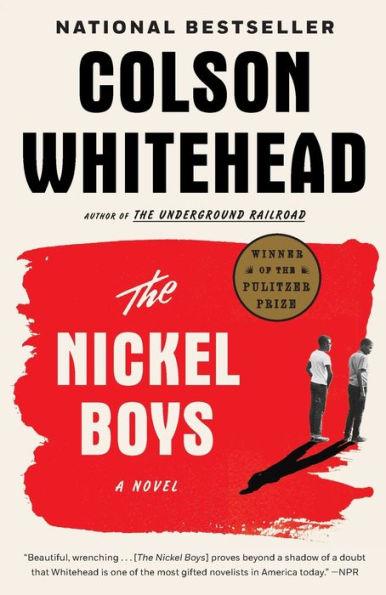
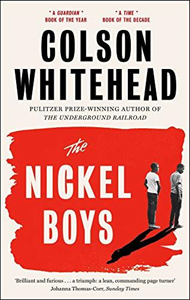
NATIONAL BESTSELLER ? In this Pulitzer Prize-winning follow-up to The Underground Railroad, Colson Whitehead brilliantly dramatizes another strand of American history through the story of two boys unjustly sentenced to a hellish reform school in Jim Crow-era Florida.
When Elwood Curtis, a black boy growing up in 1960s Tallahassee, is unfairly sentenced to a juvenile reformatory called the Nickel Academy, he finds himself trapped in a grotesque chamber of horrors. Elwood’s only salvation is his friendship with fellow „delinquent“ Turner, which deepens despite Turner’s conviction that Elwood is hopelessly naive, that the world is crooked, and that the only way to survive is to scheme and avoid trouble. As life at the Academy becomes ever more perilous, the tension between Elwood’s ideals and Turner’s skepticism leads to a decision whose repercussions will echo down the decades.
Based on the real story of a reform school that operated for 111 years and warped the lives of thousands of children, The Nickel Boys is a devastating, driven narrative that showcases a great American novelist writing at the height of his powers and „should further cement Whitehead as one of his generation’s best“ (Entertainment Weekly).
Look for Colson Whitehead’s bestselling new novel, Harlem Shuffle!
Editorial Reviews
WINNER OF THE 2020 PULITZER PRIZE FOR FICTION
ONE OF THE BEST BOOKS OF THE YEAR
Time, Esquire, The Washington Post, The Guardian, Slate, NPR, Entertainment Weekly, Vox, Variety, Christian Science Monitor, The Minneapolis Star Tribune, The Dallas Morning News, Literary Hub, BuzzFeed, The New York Public Library, Publishers Weekly
NATIONAL BOOK CRITICS CIRCLE AWARD FINALIST
ONE OF TIME MAGAZINE’S 10 BEST FICTION BOOKS OF THE DECADE
WINNER OF THE KIRKUS PRIZE
LONGLISTED FOR THE NATIONAL BOOK AWARD
LONGLISTED FOR THE ORWELL PRIZE FOR POLITICAL FICTION 2020
„A necessary read.“ –President Barack Obama
„This is a powerful book by one of America’s great writers. . . . Without sentimentality, in as intense and finely crafted a book as you’ll ever read, Whitehead tells a story of American history that won’t allow you to see the country in the same way again.“ –Toronto Star
„Colson Whitehead continues to make a classic American genre his own. . . . The narration is disciplined and the sentences plain and sturdy, oars cutting into water. Every chapter hits its marks. . . . Whitehead comports himself with gravity and care, the steward of painful, suppressed histories; his choices on the page can feel as much ethical as aesthetic. The ordinary language, the clear pane of his prose, lets the stories speak for themselves. . . . Whitehead has written novels of horror and apocalypse; nothing touches the grimness of the real stories he conveys here“ –The New York Times
„Inspired by a real school in Florida, The Nickel Boys is a haunting narrative that reinforces Whitehead’s prowess as a leading voice in American literature.“ –TIME
„[The Nickel Boys] should further cement Whitehead as one of his generation’s best.“ –Entertainment Weekly
„Were Whitehead’s only aim to shine an unforgiving light on a redacted chapter of racial terrorism in the American chronicle, that would be achievement enough. What he is doing in his new novel, as in its immediate predecessor, is more challenging than that. . . . He applies a master storyteller’s muscle. . . . The elasticity of time in The Nickel Boys feels so organic that only when you put the book down do you fully appreciate that its sweep encompasses much of the last century as well as this one. . . . A writer like Whitehead, who challenges the complacent assumption that we even fathom what happened in our past, has rarely seemed more essential.“ –The New York Times Book Review
„A masterpiece squared, rooted in history and American mythology and, yet, painfully topical in its visions of justice and mercy erratically denied . . . a great American novel.“ –Maureen Corrigan, NPR.org
„Whitehead’s brilliant examination of America’s history of violence is a stunning novel of impeccable language and startling insight.“ –Publishers Weekly, starred review
„Whitehead’s magnetic characters exemplify stoicism and courage, and each supremely craftedscene smolders and flares with injustice and resistance, building to a staggering revelation. Inspired by an actual school, Whitehead’s potently concentrated drama pinpoints the brutality and insidiousness of Jim Crow racism with compassion and protest. . . . A scorching work.“ –Booklist, starred review
„[A] stunning new novel. . . . The understated beauty of his writing, combined with the disquieting subject matter, creates a kind of dissonance that chills the reader. Whitehead has long had a gift for crafting unforgettable characters, and Elwood proves to be one of his best. . . . The final pages of the book are a heartbreaking distillation of the story that preceded them; it’s a perfect ending to a perfect novel. The Nickel Boys is a beautiful, wrenching act of witness, a painful remembrance of an ‘infinite brotherhood of broken boys,’ and it proves beyond a shadow of a doubt that Whitehead is one of the most gifted novelists in America today.“ –NPR
„Magnificent. . . . Whitehead’s prose is meticulous; he nimbly shifts between the 1960s and present day, creating a fully fleshed-out picture of violence and (in)justice.“ –Buzzfeed
„Colson Whitehead’s follow-up to The Underground Railroad is devastating and powerful, a harrowing novelization on another dark aspect of American history. . . . Never didactic, but always illuminating–even in those darkest of places in our collective story–The Nickel Boys is a brilliant, horrifying look into the legacy of Jim Crow, and the ways in which racism and oppression don’t exist in defiance to the American Dream, but rather as its fuel.“ –NYLON
„[The Nickel Boys’s] dialogue, the efficient character sketches and the unobtrusive but always-advancing plot are evidence of mature ability . . . spry and animated and seamed with dark humor . . . [with] a dazzling final twist that Mr. Whitehead stages with such casual skill that one only begins to unpack its meanings well after the book has ended. . . . The excellence of The Nickel Boys carries an added feeling of hope because it’s evidence of a gradual, old-fashioned artistic progression that fewer and fewer writers are allowed the time to pursue. . . . The Nickel Boys demonstrate the versatile gifts of a writer who is rounding into mastery. The impression left is that Mr. Whitehead can succeed at any kind of book he takes on. He has made himself one of the finest novelists in America.“ –The Wall Street Journal
„Whitehead’s new novel . . . is in many ways a continuation of his reassessment of African American history. But The Nickel Boys is no mere sequel . . . it’s a surprisingly different kind of novel. . . . Whitehead reveals the clandestine atrocities of Nickel Academy with just enough restraint to keep us in a state of wincing dread. . . . It shreds our easy confidence in the triumph of goodness and leaves in its place a hard and bitter truth about the ongoing American experiment.“ –The Washington Post
„Again [Whitehead is] wrestling with American history’s reverberations. . . . Since its moral concern is multigenerational anguish, the sense of mourning in The Nickel Boys is subvisceral–not detached, but restrained. . . . We are called to remember, ‘The past is never dead. It’s not even past.'“ –O: The Oprah Magazine
„Possibly the single most anticipated novel of the year.“ –Los Angeles Times
„A powerful meditation on suffering and injustice. . . . His subject could not be more demanding, but Whitehead’s writing is spare and stately. He handles Elwood’s and Turner’s suffering–and questions–gently. And he holds the reader carefully. . . . For the darkest of tales, that is the most a writer can do.“ –Winnipeg Free Press
„Whitehead’s signature knack for creating unforgettable characters and spinning compelling stories out of even the darkest places is on display once again–and while it’s not always an easy story to read, we’d venture to say it’s essential.“ –Town and Country
„If you thought Colson Whitehead’s Pulitzer Prize-winning novel The Underground Railroad was a tour de force, wait until you get your hands on The Nickel Boys.“ –Harper’s Bazaar
„The Nickel Boys is straight-ahead realism, distinguished by its clarity and its open conversation with other black writers: It quotes from or evokes the work of Langston Hughes, James Baldwin, Ralph Ellison and more. Whitehead has made an overt bid to stand in their company–to write a novel that’s memorable, and teachable, for years to come. The Nickel Boys is its fulfilment.“ –USA Today
„The Nickel Boys is a strictly realist work, albeit still ripe with Whitehead’s signature deadpan wit. . . . The heart of The Nickel Boys is this extended dialogue between Elwood and Turner . . . [and] often feels like Whitehead’s conversation with both the idealistic forerunners of the civil rights generation and, by implication, the woke youth of today. Like perhaps his single greatest influence, Ralph Ellison, Whitehead negotiates a tightrope walk between the need to depict the experience of race and racism and a stubborn individualistic resistance to the claims of collective identity.“ –Slate
„[Whitehead’s] prose here is elegant yet straightforward . . . these short sentences spur the action on, creating a pace that’s almost as breath-taking as the novel’s depiction of cruelty. . . . Whitehead’s novel is certainly revelatory, but more for the ways in which it traces these atrocities to the past and present, weaving tragedy into multiple lifetimes. The Nickel Boys isn’t just a testament to systemic racism; it’s an archaeology of pain.“ –A.V. Club
„[The Nickel Boys is] a marvellous play between the real situation and a novelistic artifice–one which, in the end, proves to be inherent in the human story. . . . This is a heartbreakingly good novel. Its excellence doesn’t lie in the attitude it takes to a social problem. . . . Rather, this is a book which should last because of the elegant refinement of its treatment, and the harmonious and deeply affecting balance it strikes between real-life conditions, and the requirements of the finest and most penetrating art.“ –The Spectator
„[A] remarkable novel.“ –Roxane Gay, bestselling author of Bad Feminist
„A gripping and brilliant novel based on a true story about a boys’ reformatory school in Florida in the 1960s. Whitehead is one of the most daring and gifted authors writing these days, and I will never miss one of his books.“–Elizabeth Gilbert, author of City of Girls
„[Whitehead] is a splendidly talented writer, with more range than any other American novelist currently working–he can be funny, lyrical, satirical, earnest–whatever is needed by the work.“ –George Saunders, author of Lincoln in the Bardo,
– From the Publisher
…[Whitehead] has now produced back-to-back historical novels, in the broadest definition of that term, that in sum offer an epic account of America’s penchant for paying lip service to its original sin while failing to face its full horror and its undying legacy of recidivism…He applies a master storyteller’s muscle not just to excavating a grievous past but to examining the process by which Americans undermine, distort, hide or „neatly erase“ the stories he is driven to tell…At a little over 200 pages, The Nickel Boys is even leaner than [The Underground Railroad] and no less devastating…The elasticity of time in [the novel] feels so organic that only when you put the book down do you fully appreciate that its sweep encompasses much of the last century as well as this one. While Whitehead doesn’t reprise the wholesale magic realism of his previous novel…he does pull off a brilliant sleight-of-hand that elevates the mere act of resurrecting Elwood’s buried story into at once a miracle and a tragedy.
– The New York Times Book Review – Frank Rich
The Nickel Boys-a tense, nervy performance-is even more rigorously controlled than [The Underground Railroad]. The narration is disciplined and the sentences plain and sturdy, oars cutting into water. Every chapter hits its marks. Even if your prose taste runs to curlicue and adornment (mine does), the restraint feels significant. Whitehead comports himself with gravity and care, the steward of painful, suppressed histories; his choices on the page can feel as much ethical as aesthetic…Whitehead has written novels of horror and apocalypse; nothing touches the grimness of the real stories he conveys here, of a cinder-block building that still stands…Its starkness and irresolution recalls the historian Yosef Hayim Yerushalmi’s point that the opposite of forgetting is not merely remembrance. It is justice.
– The New York Times – Parul Sehgal
*01/31/2019
„As it had ever been with Nickel, no one believed them until someone else said it,“ Whitehead (The Underground Railroad) writes in the present-day prologue to this story, in which construction workers have dug up what appears to be a secret graveyard on the grounds of the juvenile reform school the Nickel Academy in Jackson County, Fla. Five decades prior, Elwood Curtis, a deeply principled, straight-A high school student from Tallahassee, Fla., who partakes in civil rights demonstrations against Jim Crow laws and was about to start taking classes at the local black college before being erroneously detained by police, has just arrived at Nickel. Elwood finds that, at odds with Nickel’s upstanding reputation in the community, the staff is callous and corrupt, and the boys–especially the black boys–suffer from near-constant physical, verbal, and sexual abuse. Elwood befriends the cynical Turner, whose adolescent experiences of violence have made him deeply skeptical of the objectivity of justice. Elwood and Turner’s struggles to survive and maintain their personhood are interspersed with chapters from Elwood’s adult life, showing how the physical and emotional toll of his time at Nickel still affects him. Inspired by horrific events that transpired at the real-life Dozier School for Boys, Whitehead’s brilliant examination of America’s history of violence is a stunning novel of impeccable language and startling insight. (July)
– Publishers Weekly
02/01/2019
Having claimed multiple awards (including the Pulitzer) and over a million in sales across formats for The Underground Railroad, his ripped-gut portrait of American slavery, Whitehead now assays segregation through the experiences of young Tallahassee, FL, resident Elwood Curtis. In the 1960s, Elwood is college-bound until he makes a mistake that lands him at a juvenile reformatory called the Nickel Academy, whose staff profess to shape inmates into upstanding young men but who routinely deliver vicious beatings and sexual abuse and make sure resisters disappear forever. The shocked Elwood takes Martin Luther Kings’ pacifist approach to events, but friend Turner has other ideas. Whitehead researched the Florida Industrial School for Boys (later the Dozier Academy), where a secret mass grave was found after its 2011 closure.
– Library Journal
*2019-01-21
The acclaimed author of The Underground Railroad (2016) follows up with a leaner, meaner saga of Deep South captivity set in the mid-20th century and fraught with horrors more chilling for being based on true-life atrocities.
Elwood Curtis is a law-abiding, teenage paragon of rectitude, an avid reader of encyclopedias and after-school worker diligently overcoming hardships that come from being abandoned by his parents and growing up black and poor in segregated Tallahassee, Florida. It’s the early 1960s, and Elwood can feel changes coming every time he listens to an LP of his hero Martin Luther King Jr. sermonizing about breaking down racial barriers. But while hitchhiking to his first day of classes at a nearby black college, Elwood accepts a ride in what turns out to be a stolen car and is sentenced to the Nickel Academy, a juvenile reformatory that looks somewhat like the campus he’d almost attended but turns out to be a monstrously racist institution whose students, white and black alike, are brutally beaten, sexually abused, and used by the school’s two-faced officials to steal food and supplies. At first, Elwood thinks he can work his way past the arbitrary punishments and sadistic treatment („I am stuck here, but I’ll make the best of it…and I’ll make it brief“). He befriends another black inmate, a street-wise kid he knows only as Turner, who has a different take on withstanding Nickel: „The key to in here is the same as surviving out there–you got to see how people act, and then you got to figure out how to get around them like an obstacle course.“ And if you defy them, Turner warns, you’ll get taken „out back“ and are never seen or heard from again. Both Elwood’s idealism and Turner’s cynicism entwine into an alliance that compels drastic action–and a shared destiny. Inspired by disclosures of a real-life Florida reform school’s long-standing corruption and abusive practices, Whitehead’s novel displays its author’s facility with violent imagery and his skill at weaving narrative strands into an ingenious, if disquieting whole.
There’s something a tad more melodramatic in this book’s conception (and resolution) than one expects from Whitehead, giving it a drugstore-paperback glossiness that enhances its blunt-edged impact.
– Kirkus Reviews
| Jedinica mere | KOM |
|---|---|
| Autor | Colson Whitehead |
| Godina izdanja | 2020 |
| Izdavač | PENGUINRAN |
Za više informacija o proizvodu poslati upit na [email protected]
 English Books
 Medicina
 UdžbeniciAKTUELNO
 Učenje jezika
 Knjige za decu
 Knjige
 Gift
Udžbenici i škola
Gift
Udžbenici i škola Data Status izdavaštvo
Niste registrovani?
Kreirajte nalog





Recenzije
Još nema komentara.