



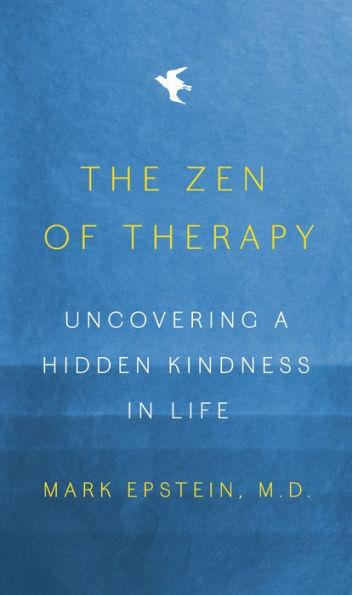
The Zen of Therapy
Šifra proizvoda:
Cena na sajtu:
3,564.00RSD
Nema na zalihama
„A warm, profound and cleareyed memoir. . . this wise and sympathetic book’s lingering effect is as a reminder that a deeper and more companionable way of life lurks behind our self-serious stories.“–Oliver Burkeman, New York Times Book Review
A remarkable exploration of the therapeutic relationship, Dr. Mark Epstein reflects on one year’s worth of therapy sessions with his patients to observe how his training in Western psychotherapy and his equally long investigation into Buddhism, in tandem, led to greater awareness–for his patients, and for himself
For years, Dr. Mark Epstein kept his beliefs as a Buddhist separate from his work as a psychiatrist. Content to use his training in mindfulness as a private resource, he trusted that the Buddhist influence could, and should, remain invisible. But as he became more forthcoming with his patients about his personal spiritual leanings, he was surprised to learn how many were eager to learn more. The divisions between the psychological, emotional, and the spiritual, he soon realized, were not as distinct as one might think.
In The Zen of Therapy, Dr. Epstein reflects on a year’s worth of selected sessions with his patients and observes how, in the incidental details of a given hour, his Buddhist background influences the way he works. Meditation and psychotherapy each encourage a willingness to face life’s difficulties with courage that can be hard to otherwise muster, and in this cross-section of life in his office, he emphasizes how therapy, an element of Western medicine, can in fact be considered a two-person meditation. Mindfulness, too, much like a good therapist, can „hold“ our awareness for us–and allow us to come to our senses and find inner peace.
Throughout this deeply personal inquiry, one which weaves together the wisdom of two worlds, Dr. Epstein illuminates the therapy relationship as spiritual friendship, and reveals how a therapist can help patients cultivate the sense that there is something magical, something wonderful, and something to trust running through our lives, no matter how fraught they have been or might become. For when we realize how readily we have misinterpreted our selves, when we stop clinging to our falsely conceived constructs, when we touch the ground of being, we come home.
Editorial Reviews
11/22/2021
Psychiatrist Epstein (Advice Not Given) explains in this thought-provoking account how and why he integrates his Buddhist beliefs into his psychotherapy practice, sharing vignettes about his patients and connecting the dots between Buddhism, Winnicott’s theories, and Freudian psychoanalysis. As he writes, „I believe in the power of awareness to heal. I want my patients to see how and when and where their egos, or superegos, are getting the best of them.“ This gets explored in stories of such patients as Jack, a child of Holocaust survivors, who „wants to know if he will ever be healed,“ and April, an anxious executive „longing… to be known, to be reached, and to be seen.“ Moving through a year’s worth of sessions, Epstein demonstrates how Buddhist thought allows him to connect to patients and can be a tool to help them manage their suffering. Indeed, he writes of having seen patients’ attachments toward themselves shift, with Buddhism as the primary vector for change. Epstein’s voice is compassionate (though sometimes his own ego is on more prominent display) and he helpfully employs a variety of therapeutic theories, as well as Buddhist poems, metaphors, and imagery. Both clients and practitioners of therapy will appreciate Epstein’s take on the complex interplay of spiritual and psychological teachings. Agent: Anne Edelstein, Anne Edelstein Literary Agency. (Jan.)
– Publishers Weekly
Epstein draws on a lifetime of personal and professional experience to deliver a profound and optimistic examination of the links between psychotherapy and meditation . . . A warm and accessible explanation of topics that defy easy explanation . . . Epstein makes abstract concepts understandable, and his accounts of his patients’ struggles and progress are laced with humor and hope . . . It’s a message receptive readers will embrace in these dark and difficult times. Empathetic and persuasive–one of the better books on psychotherapy and meditation in recent years.“ –Kirkus (starred review)
– From the Publisher
12/01/2021
Epstein (Open to Desire) became interested in Buddhism and meditation prior to becoming a practicing psychiatrist. While in medical school he spent time studying the Buddhist physiological state in Dharamshala, India, hosted by the Dalai Lama. His observations came to better understand the power of meditation and its relation to psychotherapy. Epstein started his psychiatry practice keeping his beliefs separate from his work. Over time, he began to share his perspective and many patients showed interest in learning more. This book explores a year’s work with his patients, viewing therapy from a Buddhist mindfulness perspective. He wrote down the details of a least one session every week when he sensed that a „Buddhist element was in play.“ The stories in this book support Epstein’s contention that meditation can be used to deal with the worst in life and potentially bring out the best in oneself. A large part of Epstein’s process is confronting egocentric preoccupations that can prevent a fulfilled life. He argues that only by dispassionately observing the ego can one reveal its true nature. VERDICT Meditation has become increasingly popular in self-help in recent years; Epstein’s book is recommended for anyone interested in exploring the potential benefits of a meditation practice.–Gary Medina, El Camino Coll., Torrance, CA
– Library Journal
*2021-11-03
A psychiatrist with 40 years of practice in psychotherapy and meditation shows how both can achieve the same goal: to reclaim the kindness that’s at the core of all of us.
Epstein draws on a lifetime of personal and professional experience to deliver a profound and optimistic examination of the links between psychotherapy and meditation. Drawing on influences as diverse as psychoanalyst Donald Winnicott, the Dalai Lama, and composer John Cage, Epstein offers a warm and accessible explanation of topics that defy easy explanation. The book is part memoir and part account of one year (pre-pandemic) with Epstein’s patients. In the early 1980s, as part of a medical research trip, he met the Dalai Lama. „His inspiration,“ writes Epstein, „helped me rise above the Western emphasis on mental illnessto encompass an appreciation for the possibilities of mental health.“ He was drawn to vipassana, or insight meditation, which he compares to therapy in its goal of „deliberately confronting one’s own innermost prejudices, expectations, habits and inclinations,“ and his personal goal as a therapist mirrors the further aims of insight meditation: to help his patients move from self-generated internal judgments toward a more loving attitude toward themselves and others. The author combines stories of his patients–a child of Holocaust survivors, an anorexic anesthesiologist, an actor, a medical worker for Mother Teresa’s organization–with his own search for the appropriate guidance to help them. Epstein makes abstract concepts understandable, and his accounts of his patients’ struggles and progress are laced with humor and hope. When our constructed minds drop away, he writes, „even for an instant, all kinds of latent interpersonal possibilities emerge–for connection, empathy, insight, joy, and dare we say, love.“ It’s a message receptive readers will embrace in these dark and difficult times.
Empathetic and persuasive–one of the better books on psychotherapy and meditation in recent years.
– Kirkus Reviews
| Povez i format | Tvrdi |
|---|---|
| Izdavač | PENGUINRAN |
| Jedinica mere | KOM |
| Godina izdanja | 2022 |
| Autor | MARK MD EPSTEIN |
Za više informacija o proizvodu poslati upit na [email protected]
Od istog autora
Na žalost nemamo više izdanja ovog autora.



Recenzije
Još nema komentara.